
Application 01
Construction sites
Site offices, tools, welfare and security with no genset at the gate.
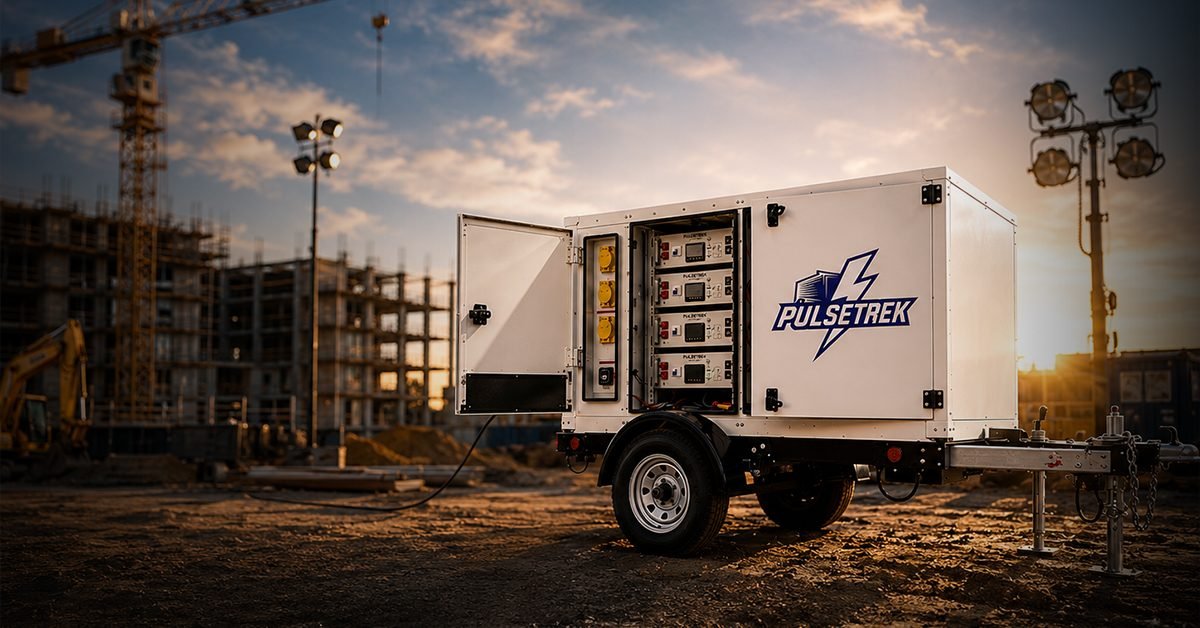
01 / ConstructionExplore this use case
Meet the PulseTrek
From job sites to live shows, explore where mobile battery power replaces the diesel generator. Every application links through to its own page.
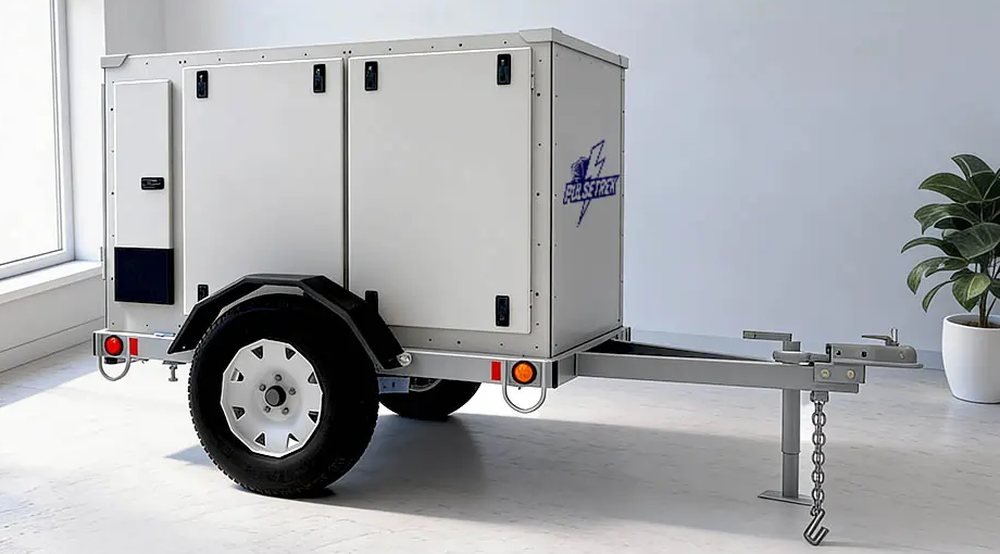 MOBILE ENERGY STORAGE
Explore applications
Site offices, tools, welfare and security with no genset at the gate.
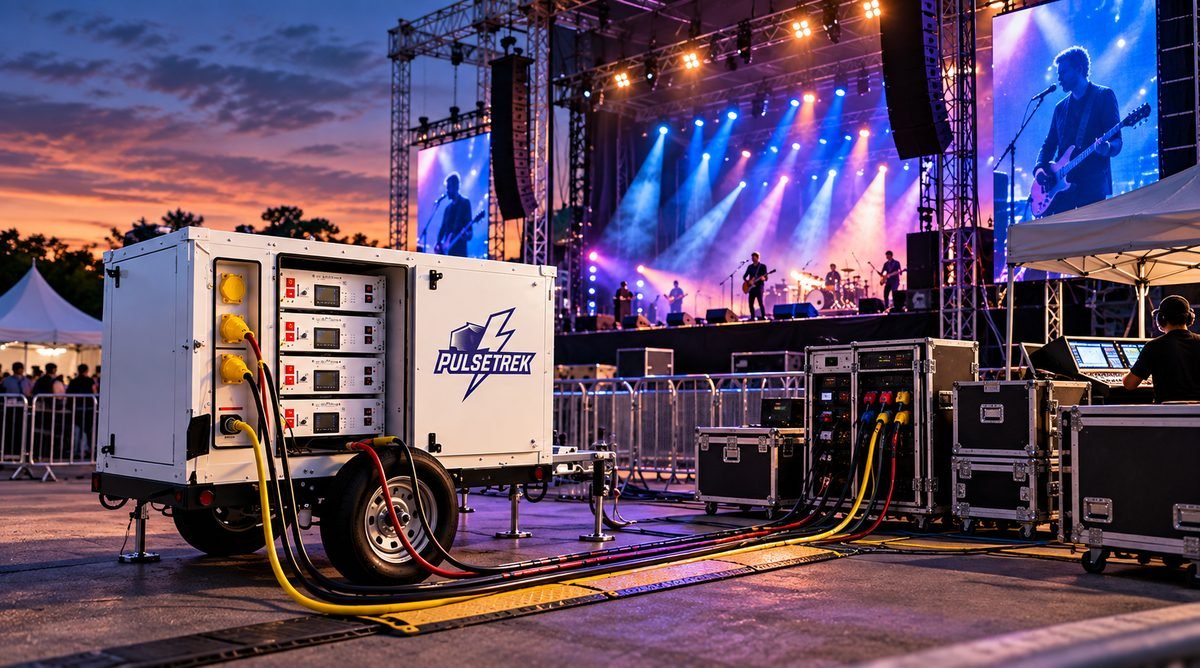
Stage lighting, PA and hospitality, silently and with no fumes near guests.
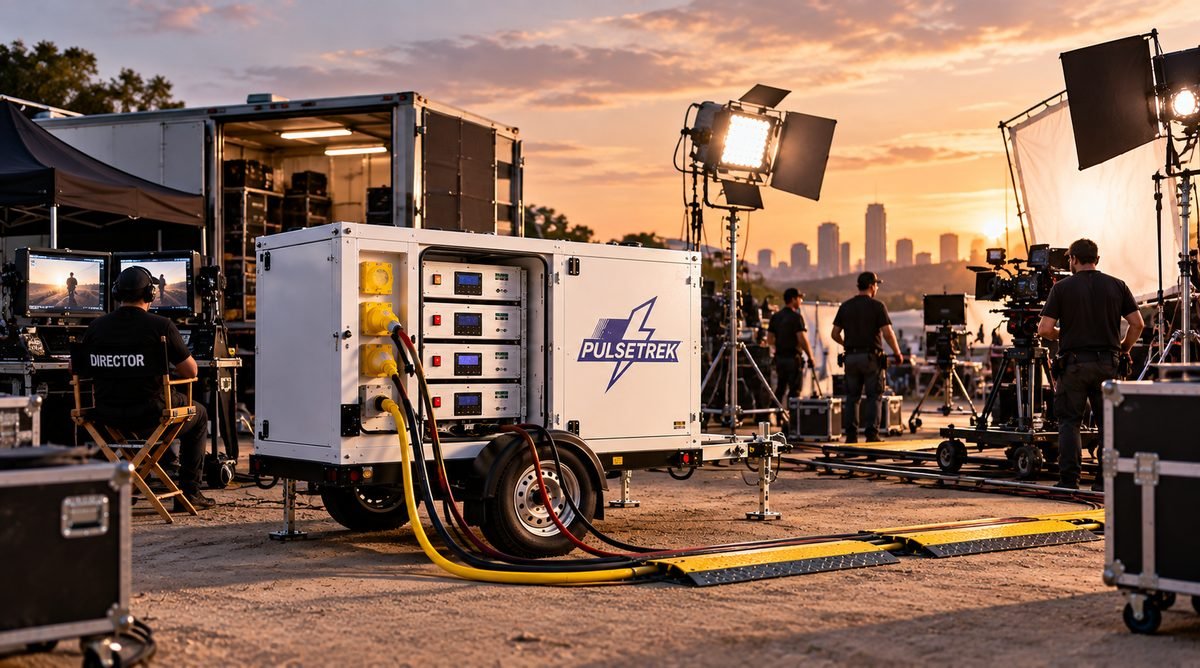
Silent power on set and on location, natively 230V/50Hz for shoots abroad.
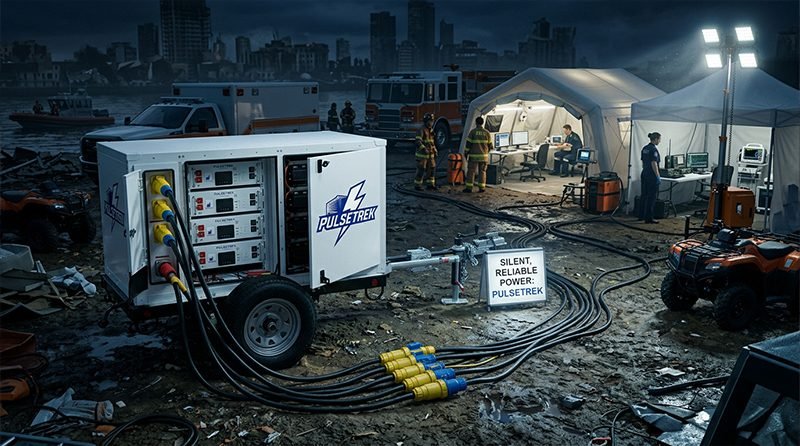
Storm and outage response with no fuel run needed to keep it going.
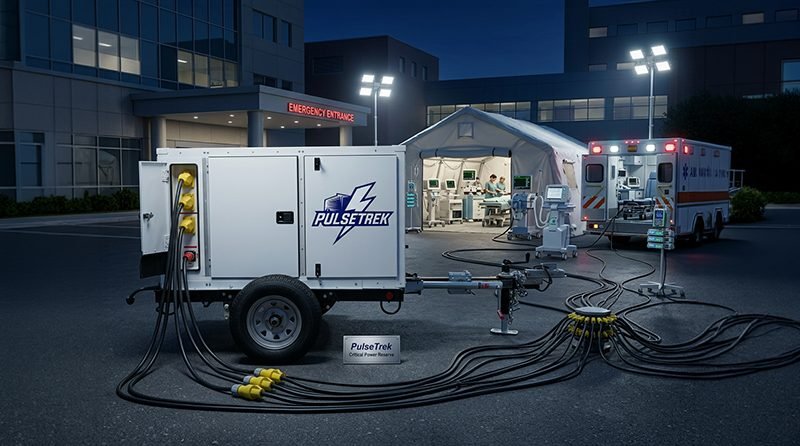
Cold chain, clinical equipment and lighting, with no carbon monoxide risk.
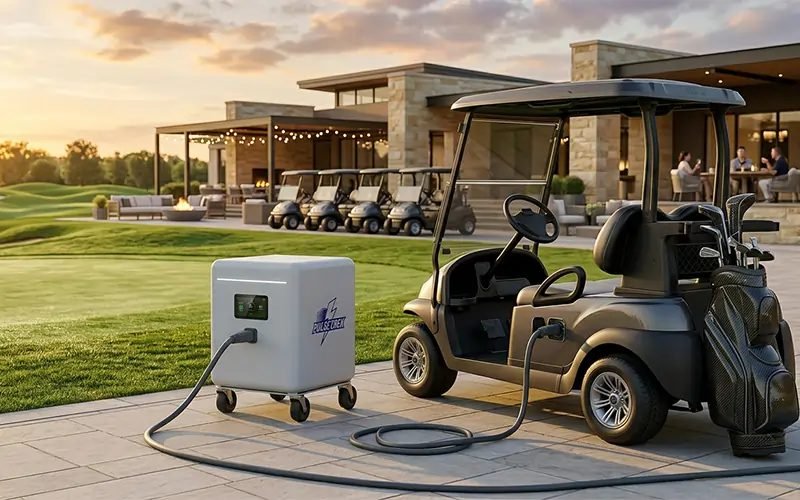
Level 1 and Level 2 charging on site, with no utility service upgrade.
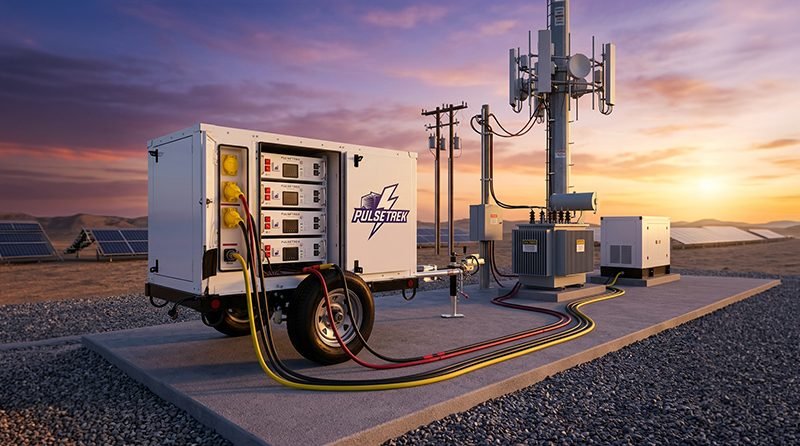
Multi-day backup at remote sites, reporting its own state of charge.
Construction power, commissioning support and demand management.
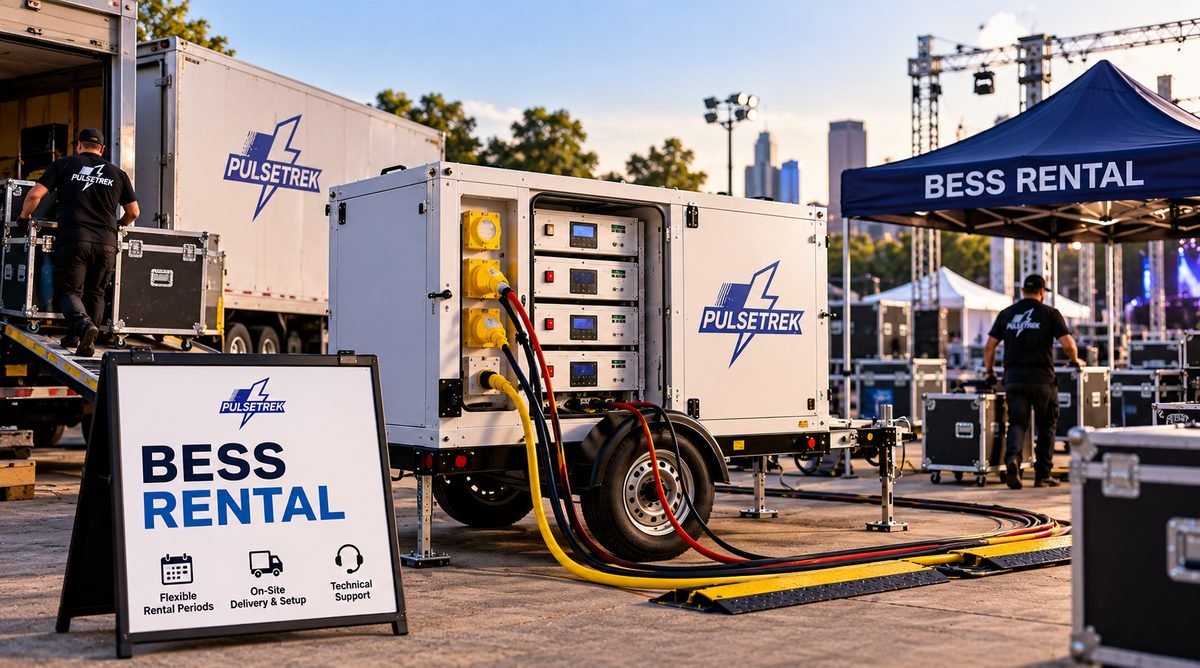
Hire by the week, month or project, with delivery and monitoring included.
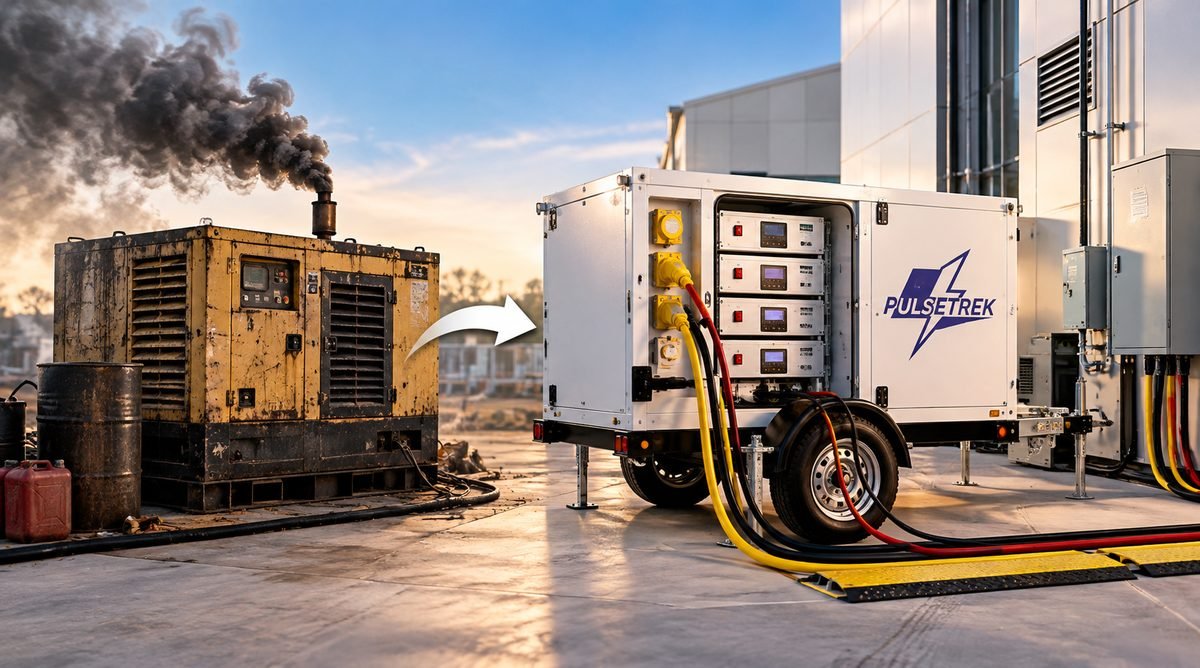
Full replacement, or a hybrid where the genset only runs to recharge.
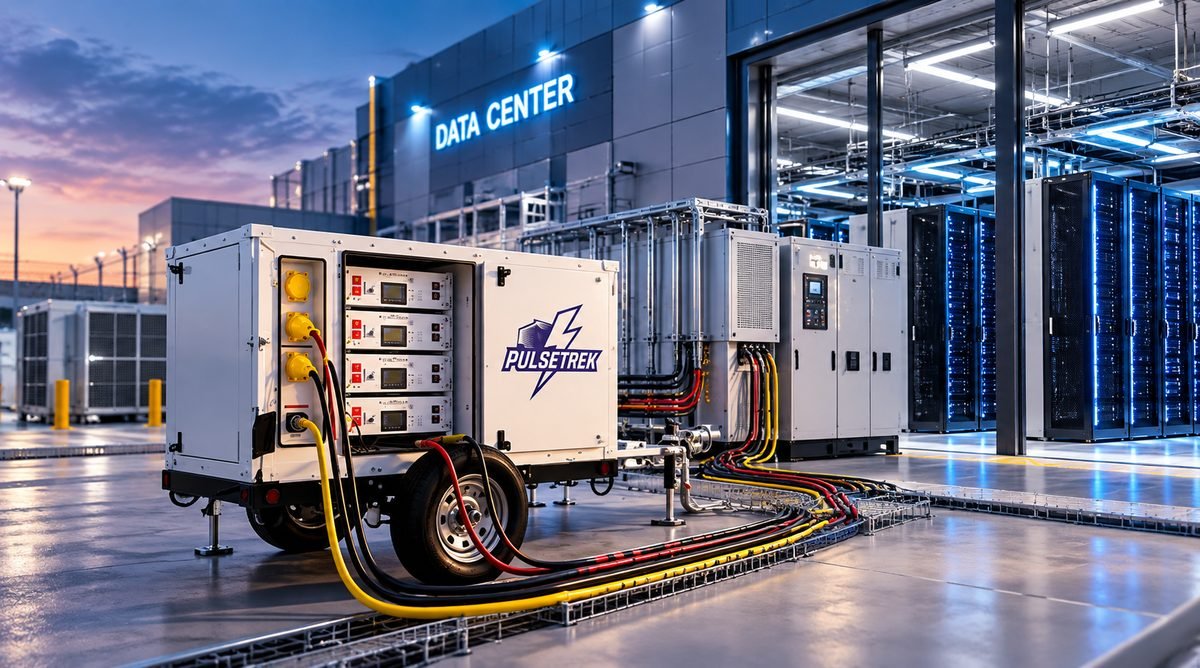
Actual fit depends on connected loads, peak demand, operating time and system configuration.
What PulseTrek is
A mobile BESS — a battery energy storage system on a trailer — stores electrical energy and delivers it on demand, without fuel, noise or emissions. PulseTrek systems are commercial-grade BESS units ranging from 15 kWh to 8.3 MWh, built around lithium iron phosphate (LFP) cells and an intelligent battery management system.
On a temporary site, a diesel generator usually runs far below its rating for most of its life: burning fuel, needing servicing, and breaking the noise ordinance while it does it. A PulseTrek covers the same load from stored energy and only draws power when it needs to refill — from shore power, from an existing genset, or from the solar upgrade kit.
That makes it a direct diesel generator alternative for construction sites, live events, film production, emergency response, healthcare, telecom, EV fleet charging and data centre support.
Why battery
The same load, covered two ways.
| On site | Diesel generator | PulseTrek BESS |
|---|---|---|
| Noise | 65–85 dB | Silent |
| Emissions | Exhaust and carbon monoxide | None in operation |
| Fuel | Daily deliveries, spill risk | No fuel at all |
| Indoor and enclosed use | Not permitted | Yes — no exhaust or CO |
| Maintenance | Oil, filters, scheduled servicing | Near zero |
| Noise permits | Often required | Not an issue |
| Service life | Rebuild cycles | 6,000+ cycles, 10+ year warranty |
| Load following | Poor at low load (wet stacking) | Full efficiency at any load |
How it works
01
Tow the trailer to the pad and connect the load through the onboard transfer switch — 50A on the Base models, 100A on the Performance model. Nothing to vent, nothing to fuel.
02
The battery carries the site silently — up to 8,000 W continuous and 20,000 W peak on the Performance model — with an intelligent BMS balancing the load and protecting the pack.
03
Top up from shore power, from an existing generator, or from the solar upgrade kit for open-ended off-grid runtime. Fleet operators can swap packs through our 8 MWh storage hubs.
The range
15 kWh · 2,400 W continuous · 120V/60Hz. Small crews and supplemental backup.
30 kWh · 2,400 W continuous · Level 1 EV charging built in.
30 kWh · 8,000 W continuous, 20,000 W peak · native 230V/50Hz.
Utility support, data centres and large compounds, up to 8.3 MWh.
Industries
Trailer compounds, tools and site lighting without a genset at the gate.
Stages, PA and hospitality with no fumes near guests and no permit fight.
Silent power for sound stages and remote locations, natively 230V/50Hz.
Rapid dispatch for outages, storms and long-term community backup.
Clinics, mobile units and cold chain with zero CO risk indoors.
Level 1 and Level 2 charging on site, no service upgrade required.
Tower and node backup that holds through multi-day outages.
Construction power, resilience support and generator reduction.
Field record
When the storm took the grid down across the Texas coast, PulseTrek systems kept medical facilities running — no fuel runs on flooded roads, no generator to keep refilling.
Productions working far outside the grid ran on PulseTrek's native 230V/50Hz output from day one — silent on set, with no voltage conversion and no genset shipped into the sand.
A 30 kWh trailer runs a typical construction site for 4–8 hours, a 5 kW concert stage for around 6 hours, or emergency lighting and communications for up to 7 days at low load.
Service areas
Rental, sales, lease and financing from our Liberty Hill facility, with local pages for more than 150 cities.
Every Texas city we cover, from Liberty Hill outwards.
Built here: the shortest line to the factory.
Hurricane backup and industrial temporary power.
Construction, logistics and EV fleet charging.
Federal procurement, medical and event power.
Every state and city, from California to Florida.
Find battery generator rental by city.
230V/50Hz systems for export markets.
The company
PulseTrek began in 2014 as Voltabox of Texas, the US arm of German battery engineering firm Voltabox AG. The brief has not changed since: take industrial-grade lithium iron phosphate and use it to end diesel dependency on temporary and off-grid sites.
Everything is designed and assembled in Texas, which makes PulseTrek eligible under the Buy American Act for federal, municipal, FEMA and defence procurement. The same facility supports OEM and private-label builds in both 120V/60Hz and 230V/50Hz, and ships worldwide. More about PulseTrek →
Questions answered
Yes. Financing is available from just $700/month through our financing partner, subject to credit approval.
Everywhere in the USA. Every unit is built in Liberty Hill, Texas, so Texas sites get the fastest delivery, and units ship to all 50 states and export markets.
A BESS is a rechargeable battery unit that stores electrical energy and delivers it on demand, without fuel, noise or emissions. PulseTrek systems are commercial-grade BESS units ranging from 15 kWh to 8.3 MWh.
A mobile BESS is a battery energy storage system built onto a trailer or into a container so it can be moved between sites. PulseTrek trailers are towable on a 3,500 lbs GVWR chassis and deploy in minutes with no fuel, venting or CO monitoring.
Yes, for most temporary and standby applications. A PulseTrek covers the site load from stored energy and recharges from the grid, an existing generator or solar. On sites with a genuinely continuous high load, the battery is paired with a right-sized generator so the generator runs only to recharge.
Runtime depends on the load. A 30 kWh trailer runs a typical construction site for approximately 4 to 8 hours, a 5 kW concert stage for around 6 hours, or emergency lighting and communications for up to 7 continuous days at low load. Solar recharging extends this indefinitely off-grid.
Yes. PulseTrek uses highly thermally stable LFP chemistry and produces no emissions in operation. Unlike diesel or propane generators, which produce carbon monoxide, PulseTrek can be operated safely in warehouses, film studios, indoor events, hospital environments and enclosed spaces.
PulseTrek systems are designed and assembled in Texas, making them eligible for federal procurement under the Buy American Act. This matters for government agencies, municipalities, FEMA contractors and defence buyers requiring US-manufactured equipment. Documentation of US manufacturing origin is available on request.
Get in touch
Tell us the site, the load and the runtime you need. Our Austin engineering team comes back with a configuration, a runtime estimate and a price.
+1 512-316-7347
info@pulsar.industries
WhatsApp +1 512-585-8293