Instant-on backup for hospitals, shelters, and command centers during grid outages. Disaster-proven through Hurricane Harvey. Solar rechargeable. Zero CO. Safe indoors.
Reliable emergency power is critical during natural disasters, grid failures, and humanitarian crises. PulseTrek emergency battery power stations provide rapid-deploy, silent, and zero-emission energy for disaster relief operations, emergency shelters, hospitals, command centers, and rescue teams.
Designed for fast deployment and dependable off-grid performance, PulseTrek battery systems help emergency response teams maintain critical operations during hurricanes, floods, earthquakes, wildfires, and severe weather events.
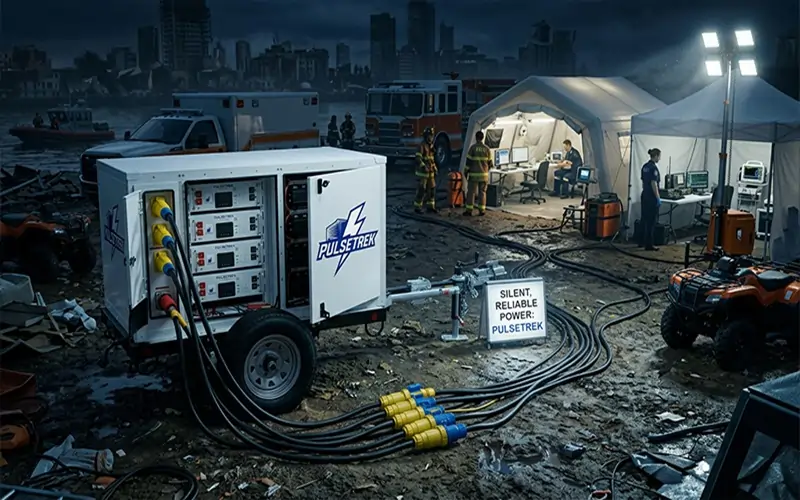
No warm-up. No priming. Power is available the moment the unit is positioned and switched on — critical in the first minutes and hours of any emergency response. Diesel generators take 30–60 seconds of stabilization. PulseTrek is instant.
Diesel generators are strictly prohibited indoors due to lethal carbon monoxide. PulseTrek produces zero CO, zero exhaust, zero fumes — completely safe inside hospital wards, operating theaters, emergency shelters, refugee centers, and command posts where patient and responder safety is paramount.
Solar rechargeable without grid or fuel supply chain dependency. Operate indefinitely at remote disaster sites with no fuel delivery logistics. Critical advantage when fuel supply chains are disrupted — which is exactly when emergency power is needed most.
PulseTrek has been deployed in real disaster scenarios — keeping a Gulf Coast medical facility powered for 11 continuous days during Hurricane Harvey without a single interruption and without any diesel fuel on site. Real deployment. Real results.
Performance Model outputs 230V/50Hz — compatible with international medical and relief equipment used in global humanitarian deployments. Operate ECMO machines, ventilators, and diagnostic equipment from European or Middle Eastern medical NGOs directly.
Track battery status, power consumption, and system health from a command center remotely — without risking personnel in hazardous conditions. Fault alerts sent immediately when BMS detects any issue.
ICU equipment, refrigeration, lighting, communications — silent, CO-free power that keeps life-safety equipment running during extended grid outages.
Lighting, HVAC, communications, water pumps — powering shelters safely without diesel fumes or generator noise disrupting displaced populations.
Radio communications, computers, satellite equipment, lighting — reliable power for emergency management coordination centers.
Pumps, treatment equipment, monitoring systems — maintaining clean water supply during infrastructure emergencies.
Medication storage, food preservation, vaccine cold chains — maintaining temperature-sensitive supplies during extended outages.
Cell tower backup, satellite uplinks, radio repeaters — maintaining communications infrastructure when it matters most.
Search lighting, rescue equipment power, UAV charging, thermal imaging — powering rescue operations in the field.
Portable medical equipment, defibrillators, diagnostic tools — clean, immediate power for field medical operations anywhere.
Emergency response operations have specific power requirements that diesel generators may struggle to meet in critical scenarios. Improper indoor use of diesel or gas generators can create serious carbon monoxide risks for responders and patients (CDC, FEMA). Fuel supply chains can be disrupted during major disasters. Generator noise may impact medical procedures and communications. PulseTrek's LFP battery technology addresses these challenges through silent, zero-emission operation.
FEMA and CDC data highlight generator-related carbon monoxide exposure as a significant cause of preventable disaster-related fatalities. CO is colorless, odorless, and dangerous in enclosed or poorly ventilated spaces. Hospitals, emergency shelters, and command centers — all enclosed environments — require strict safety compliance when using fuel-based generators, including OSHA ventilation and placement regulations that can increase operational complexity and cost. PulseTrek produces zero carbon monoxide, supporting safer use in sensitive environments.
Major disasters disrupt fuel supply chains exactly when emergency power demand is highest. Hurricane Maria left Puerto Rico without widespread fuel access for weeks. Hurricane Harvey disrupted fuel logistics across the Gulf Coast. PulseTrek's solar integration enables fuel-independent emergency operations — charging from sunlight during the day and supporting critical equipment at night without reliance on fuel delivery logistics.
Tell us your power requirements — we'll identify the right PulseTrek system and provide a detailed quote within one business day.